
Why the International Baccalaureate (IB)?
Forrest Primary School is an International Baccalaureate (IB) World School, offering the Primary Years Programme (PYP) from preschool to year 6.
At Forrest, the IB Primary Years Programme uses a transdisciplinary approach to curriculum design, mapping Australian Curriculum concepts, knowledge and skills within our PYP units of inquiry along with stand alone teaching of subjects as appropriate. To find out more about the Australian Curriculum please visit www.australiancurriculum.edu.au
A world class education
More than 4,000 schools worldwide so far have chosen to become International Baccalaureate® World Schools, with their unique academic rigour and their emphasis on students’ personal development. Research from across the globe shows that in many cases, students in IB schools perform better than students taking other qualifications. This includes results in national testing such as NAPLAN, and in increased entry to top quality universities.
The Primary Years Programme has been developed over time, in response to educational research, and incorporate long term feedback from principals, teachers and students. In becoming a PYP school, Forrest Primary School has joined an influential, international teaching community that shares up to date, evidence-based teaching practices and offers our staff high level training. The performance of IB schools is routinely evaluated to retain the title of IB World School.
Creating a better world
The IB educates both the heart and the mind. We endeavour to shape our young people into responsible, global citizens who take meaningful action to make the world a better place. We endeavour for our Forrest students to grow up to be respectful and curious lifelong learners.

IB Learner Profile
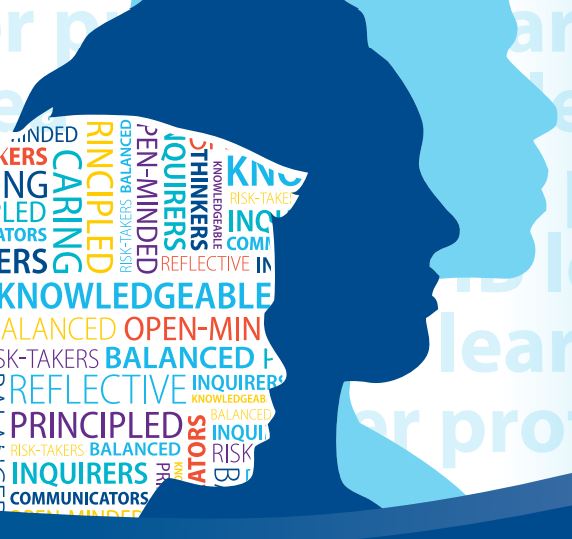
The IB Learner Profile is at the heart of our school culture. Forrest students and staff strive to be:
- Inquirers
- Knowledgeable
- Thinkers
- Communicators
- Principled
- Open-minded
- Caring
- Risk-takers
- Balanced and
- Reflective
Prepared for the future
We know our world is changing, and the skills of today may not be relevant tomorrow. What will the workplaces of our students look like? How do we provide training for them? Our economy is changing and our leaders now need creativity, critical thinking, the ability to problem solve, reflect and adapt, they need entrepreneurial skills, literacy skills, IT skills, people skills. We reject the old model in which the teacher knows all, and the student’s role is to passively listen. This will not provide the skills our students will need to be successful.
At Forrest IB World School our programmes deliver:
- voice, choice and ownership for students over learning and the classroom environment
- learning that is challenging, relevant and engaging
- differentiated tasks to support or extend your child
- connections with the world outside the classroom
- a high level of self reflection to help students understand themselves as learners
- a focus on critical thinking, creativity and questioning

The IB Primary Years Programme (PYP)
Developing curious minds and confident life long love of learning
Source: www.ibo.org/pyp
What is the IB Primary Years Programme?
A transformative and caring approach that builds a lifelong love of learning.
The PYP, for students aged 3-12, is the springboard for a lifelong love of learning. Through its child-centred, caring and thoughtful approach to learning, it nurtures the whole child and gives them ownership of their studies from the very beginning.
The inquiry-based learning environment means that a student's unique abilities and interests are considered while building the skills they will need throughout life. This includes thinking, researching and cultural understanding. The most important thing that students get from the programme is a curiosity to learn and the ability to find things out for themselves and have a positive impact on the local community.
- PYP students are excited to go to school and enjoy the process of inquiry-based learning. By encouraging a student's voice, choice and ownership, the PYP builds confident, happy, creative, empathetic and self-motivated young people.
- PYP teachers are empowered as the architects of learning with the freedom to personalise learning for different needs, cultures and contexts. They also have access to a global network of peers who collaborate to share best practice.
- PYP schools enjoy a framework that delivers transformational outcomes, yet is flexible enough to adapt to cultures, communities and national requirements.
Key features in the PYP curriculum framework
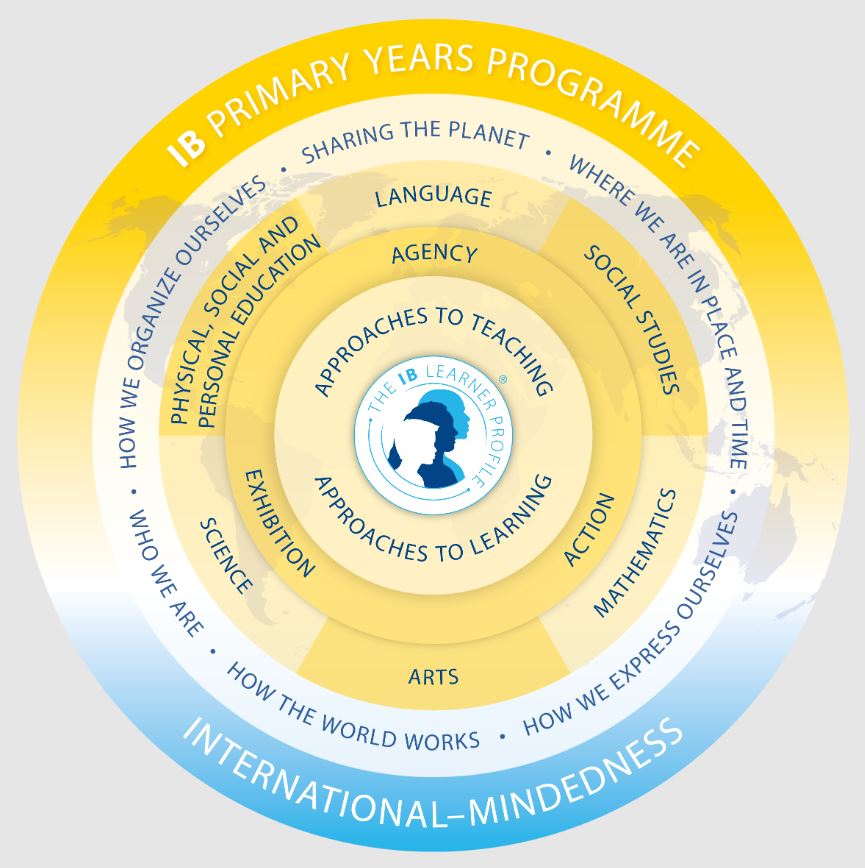
Informed by research into how children learn, the PYP places emphasis on conceptual, inquiry-based learning, which builds a student's awareness of local and global issues and motivation to take meaningful action.
 © International Baccalaureate Organization 2024
PYP students enjoy a framework of education that:
- enhances the delivery of national curricula
- develops cultural awareness through second language learning
- builds compassion, individual thinking and confidence i their learning and ability
Transdisciplinary learning
The PYP is designed to intentionally support transdisciplinary learning, aligned with the way that children naturally learn.
Teachers guide learning experiences through six different themes that cross subject boundaries and build on what the children know, to help them relate to the world around them.
The six transdisciplinary themes are:
- Who we are
- Where we are in place and time
- How we express ourselves
- How the world works
- How we organize ourselves
- Sharing the planet
Student agency
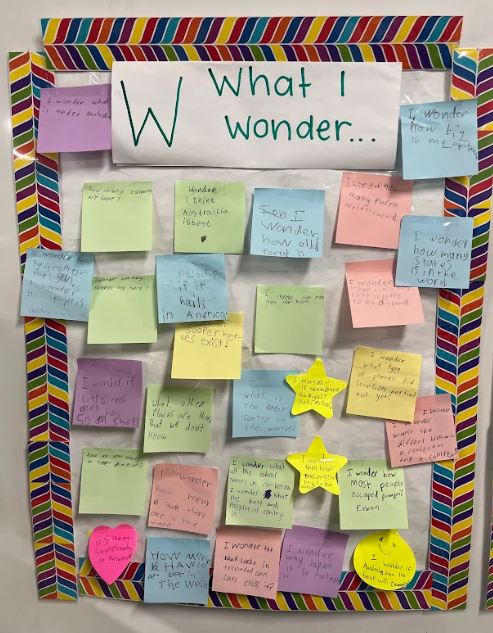
The PYP emphasizes the principle of student agency - voice, choice and ownership - which underpins the three pillars of school life: the learner; learning and teaching; the learning environment. This enables teachers to create a culture where relevant, authentic and challenging learning experiences take place.
Assessment
PYP students use their initiative to take responsibility and ownership of their learning; collaborating with teachers to deepen understanding and increase their confidence and self-motivation. Through actively engaging in holistic on-going assessment, they become self-regulated learners who act on constructive feedback. This feedback helps PYP students to self-monitor and adjust learning experiences to gain confidence in their own abilities, increase wellbeing and build resilience.
The PYP exhibition
In the final year of the PYP, students take part in the PYP exhibition, which gives them the opportunity to explore, reflect, document and share their understanding of an issue of personal significance. The whole learning community shares and celebrates this in a culminating event. The presentation and assessment skills established through the PYP exhibition develops confident learners and successfully prepares students for the IB Middle Years Programme or the next stage of their education.