
Australian Curriculum General Capabilities - Personal and Social
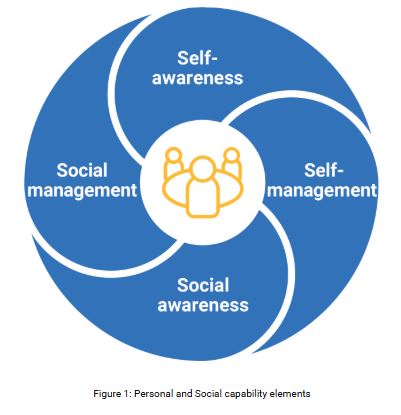
The Australian Curriculum Personal and Social Capability provides a foundation for students to understand themselves and others, and navigate their relationships, lives, work and learning and is used as the basis of our Social Emotional Learning program at Forrest Primary School.
Students with well-developed social and emotional skills find it easier to manage themselves, relate to others, collaborate, develop empathy, set goals and resolve conflict. They feel positive about themselves and the world around them.
The Personal and Social capability supports students to build their ability to regulate their thoughts, emotions and behaviours. This ability assists students to effectively engage with new ways of thinking, knowing and doing in an increasingly demanding and diverse global society.
The Personal and Social capability learning continuum Level 1a supports students with disability to access age-equivalent content and participate in learning on the same basis as their peers.
Developing and celebrating the IB learner profile attributes
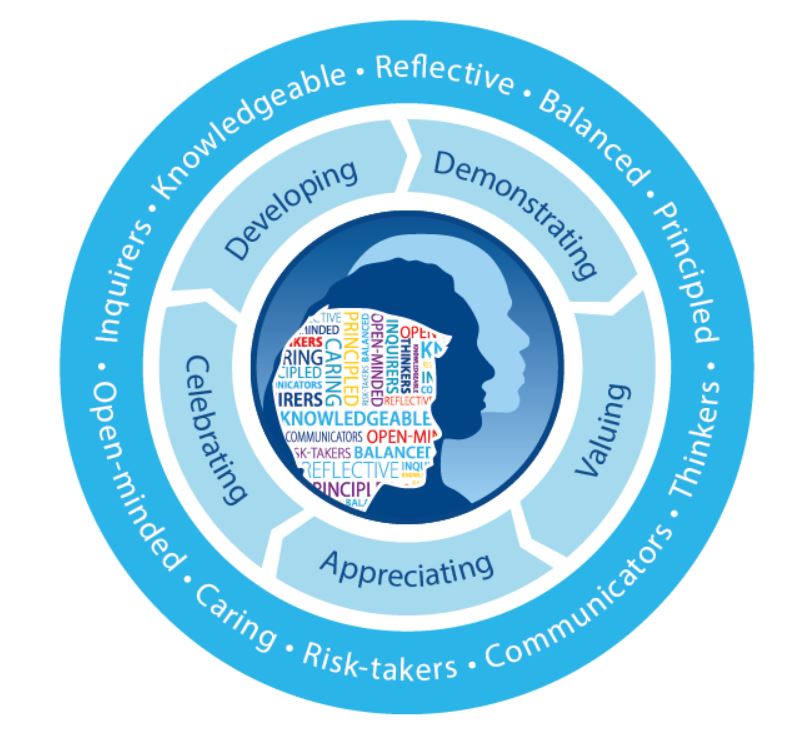 The learner profile supports students in developing international-mindedness and in taking action for positive change. Exercising their agency, students take ownership of their learning, express their ideas and opinions, and reflect on their development of the learner profile attributes.
The Forrest learning community supports and nurtures students in developing and demonstrating the attributes of the learner profile in ways that are relevant to the local context and appropriate for each student’s development stage. All members of our learning community play an important part in valuing, appreciating, demonstrating and celebrating the learner profile in action.
Our students have a range of opportunities to develop, demonstrate and reinforce attributes of the learner profile in the daily life of the Forrest learning community. For example, these opportunities arise:
- as part of the school curriculum—through the transdisciplinary units of inquiry and through subject-specific investigations
- through interactions in a variety of learning spaces—in their classroom, our library, music and visual arts rooms, indoor hall and outdoor spaces
- through social interactions—break times, participating in sporting teams and interest groups/clubs and attending excursions such as museum visits, interschool sports events, camps
- through school events—assemblies, cultural days, sports days
- at home and in the wider community—interactions with family, friends, local businesses, sports clubs, interest groups.
Approaches to Learning
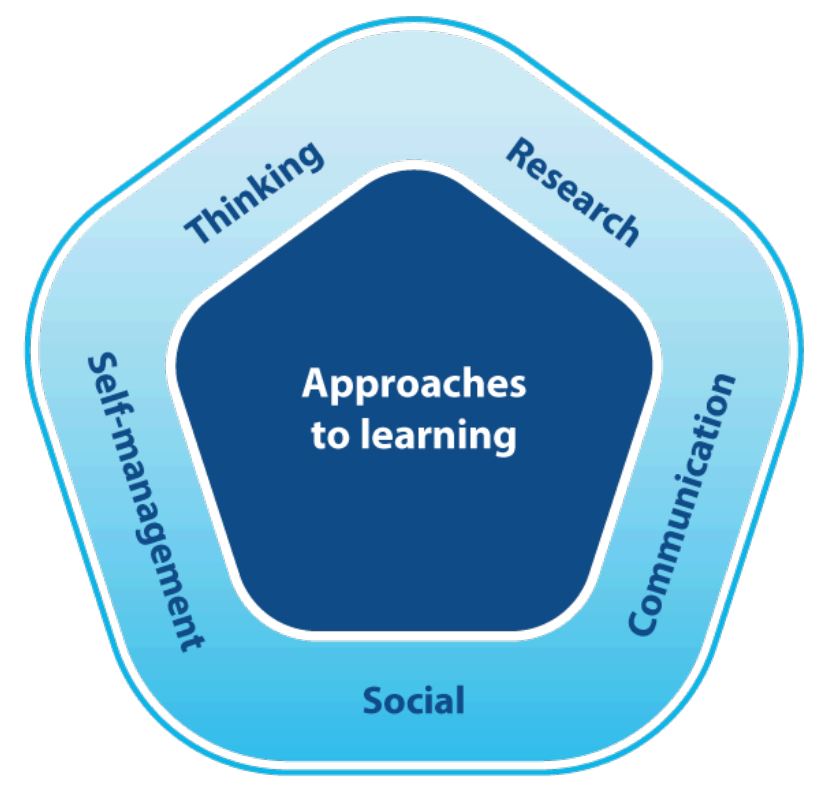
Approaches to learning (ATL) are an integral part of an IB education and complement other aspects of the PYP, such as the learner profile, knowledge, conceptual understanding and learning through inquiry. Through a variety of strategies, teachers collaboratively plan for implicit and explicit opportunities to develop each student's ability to demonstrate ATL skills both inside and outside the programme of inquiry.
Teachers foster and support the development of these skills by providing opportunities embedded in authentic learning experiences, encouraging students to:
Social Skills
- Practise empathy and care for others
- Listen closely to others’ perspectives and to instructions
- Be respectful to others
- Learn cooperatively in a group: being courteous, sharing, taking turns
- Help others to succeed
- Build consensus and negotiate effectively
- Make fair and equitable decisions
- Encourage others to contribute
- Take on a variety of roles in group learning
- Advocate for one’s own rights and needs, and those of others
- Be aware of own and others’ emotions
- Manage anger and resolve conflict
- Be self and socially aware
- Be aware of own and others’ impact as a member of a learning group
Self Management Skills
- Use strategies to support concentration and overcome distractions
- Demonstrate persistence
- Use strategies to remove barriers to learning for all
- Take responsibility for one’s own actions
- Use strategies to prevent and eliminate bullying
- Use strategies to reduce stress and anxiety
- Manage anger and resolve conflict
- Practice positive thinking and language that reinforces self-motivation
- Manage setbacks
- Work through adversity
- Work through disappointment
- Work through change
Communication Skills
- Listen actively to other perspectives and ideas
- Listen actively and respectfully while others speak
- Be aware of cultural differences when providing and interpreting communication
- Responsibly participate in, and contribute to, digital social media networks
- Understand the impact of media representations and modes of presentation
- Make informed choices about modes of communication based on audience
- Communicate information and ideas effectively to multiple audiences
Research Skills
- Gather information from a variety of primary and secondary sources
- Use critical literacy skills to analyse and interpret information
- Understand the significance of academic integrity and intellectual property rights
- Seek a range of perspectives from multiple and varied media sources
- Use media ethically to communicate, share and connect with others
- Differentiate reliable from unreliable resources
- Understand the impact of media representations and modes of presentation
Thinking Skills
- Observe carefully in order to recognize problems
- Recognize unstated assumptions and biases
- Consider ideas from multiple perspectives
- Develop contrary or opposing arguments
- Propose and evaluate a variety of solutions
- Ask “what if” questions
- Consider multiple alternatives, including those that might be unlikely or impossible
- Practise flexible thinking
- Apply skills and knowledge in unfamiliar situations or outside of school
- Identify strengths and areas for improvement
- Reflect on their learning and actions
Restorative Practice
Restorative Practice is a strategy used at Forrest Primary that seeks to repair relationships that have been damaged, including those damaged through bullying. It does this by bringing about a sense of remorse and restorative action on the part of the person who has bullied someone and forgiveness by the person who has been bullied.
The rationale behind this approach is that when offenders reflect upon their harm to someone:
- they become remorseful and act restoratively
- practitioners can focus on the unacceptable behaviour of offenders rather than their moral character
- this can lead to healthier interpersonal relations among members of the school community and more effective learning.
Restorative Practice Questions
When Things Go Wrong (Questions for the perpetrator)
- What happened?
- What were you thinking / feeling at that time?
- What are you thinking / feeling now?
- Who has been affected by what you have done? In what way?
- What do you think you need to do to make things right?
When someone has been hurt (Questions for the victim and others)
- What happened?
- What were you thinking / feeling at that time?
- What are you thinking / feeling now?
- What impact has this incident had on you and others?
- What has been the hardest part for you?
- What do you think you need to do to make things right?
Different types of conferencing that the teacher may use:
- to have children conference themselves and report the result to the teacher
- to facilitate a corridor conference
- to facilitate an informal conference
- to facilitate a circle time with the whole class

School Psychologist
Forrest Primary School has a school psychologist who works part-time to assist children and families with any issues and to administer diagnostic tests when required. Students and families may initiate a meeting with the school psychologist at any time by contacting the front office.
Student Support and Wellbeing Resources
The Education Directorate has a range of resources to support families and students will well-being on their website which you can access here: Wellbeing Support Resources for students and families - Education (act.gov.au)